
Biology-Education-MOOC
Finns sedan: 13 april 2026
Biology-Education-MOOC
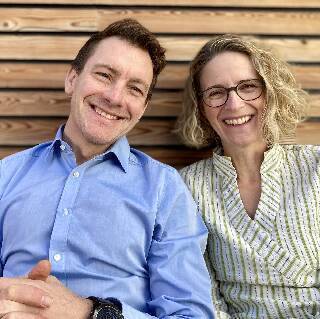
Sonja und Steffen Schaal
Vetenskaplig klassificering:
Finns sedan: 13 april 2026
Biology-Education-MOOC
Sonja und Steffen Schaal
-
Omfattning: 16 enheter
-
Arbetsinsats: 2 timmar/enhet
-
Finns sedan : 13 april 2026
-
Finns tillgängligt till och med: tillgänglig på obegränsad tid
-
Nuvarande status: pågående kurs
-
Nuvarande deltagare: 441
-
Licens: CC BY-NC-SA 4.0
-
Tillgängliga språk:
Trailer
Kursinformation
Allmänt
The Biology-Education-MOOC is a freely accessible online course that introduces the basics of teaching and learning biology.
The course covers key didactic insights, concepts, and methods for designing biology-related educational processes appropriately.
The individual lessons are designed by experts who research and work in the respective field.
The primary target group for the Biology-Education-MOOC is teacher training students studying biology in the early stages of their studies.
Colleagues in biology education can use the Biology-Education-MOOC to accompany and supplement their own courses.
Kursinnehåll
Lesson 1: Why biology? The purpose of the school subject and the profile of biology education
Lesson 2: Thinking from the perspective of learners: The Model of Educational Reconstruction
Lesson 3: More than knowledge: Focus on educational standards and competence orientation
Lesson 4: Competence area of knowledge acquisition: Experimentation
Lesson 5: Competence area of knowledge acquisition: Modeling
Lesson 6: Competence area of communication
Lesson 7: Competence area of evaluation and decision-making
Lesson 8: Digital technologies for teaching and learning biology
Lesson 9: Shaping the future: Sustainability, climate education, and global learning
Lesson 10: Health education
Lesson 11: Sex education
Lesson 12: Embracing uncertainty: Dealing with uncertainty in biology lessons
Lesson 13: Designing biology lessons with sensitivity to diversity
Lesson 14: The fascination of diversity: Species knowledge in biology lessons
Lesson 15: From concept to lesson: Lesson planning
Lesson 16: Reflexivity and teacher professionalism
Lärandemål
The Biology-Education-MOOC introduces you to the design of educational processes related to biology and the teaching and learning of biology. You will develop the fundamentals of what is known as professional knowledge for biology teachers.
Biology teaching professionalism is characterised by the combination of sound subject knowledge with subject-specific teaching skills, enabling teachers to convey complex scientific phenomena in a student-oriented manner and to adapt learning processes based on current educational research.
Participants develop and use theoretical concepts and models for planning, designing, and reflecting on biology lessons.
Förkunskaper
Previous experience in biology education is not required.
Kursplan
The Biology-Education-MOOC comprises 16 units, each consisting of at least (i) a learning video (max. 10-12 minutes), (ii) in-depth tasks, (iii) additional sources and materials, and (iiii) a learning assessment.
Each unit has a specific workload, so that completion of all units and the certificate obtained corresponds to a workload of one ECTS (maximum 2 hours per lesson).
Upon request, the certificate can also be awarded as a microcredential for a digital portfolio such as EUROPASS.
Individual units can also be completed. Upon successful completion, participants receive a “badge.”
Certifikat
For actively participating in the course you will receive an automatic certificate which includes your name, the course name as well as the completed lessons. We want to point out that this certificate merely confirms that you answered at least 75% of the self-assessment questions correctly.
Licens
This work is licensed under CC-BY-NC-SA 4.0. https://creativecommons.org/licenses/by-nc-sa/4.0/deed.de
When naming the CC license, please mention the authors and Fachsektion Didaktik der Biologie (FDdB).
Ytterligare information
Kursledare
Sonja und Steffen Schaal
Sonja and Steffen Schaal are committed to future-oriented teacher training in research and teaching.
In several projects they deal with the training of a reflexive teacher habitus, which is an essential part of the training of 21st Century Skills in many socially relevant areas such as educational justice, biodiversity and sustainability, health and sex education, development of a culture of digitality.
As course creators, they represent a large team of biology educators and researchers from Germany, Austria, and Switzerland (all participants are named in the Partners section and introduced in the video).
Dr. Steffen Schaal
Professor of Biology and Biology Education at the Ludwigsburg University of Education
Dr. Sonja Schaal
Professor of Biology and Biology Education at the Ludwigsburg University of Education
Professor of Biology and Biology Education University of Education Schwäbisch Gmünd (until 03/26)
Partners
All authors are members of the FDdB of the umbrella organization for the life sciences in Germany VBIO
https://www.vbio.de/fddb-fachdidaktik
Prof.'in Dr. Julia Arnold, Fachhochschule Nordschweiz
Dr. Melanie Basten, Universität Bielefeld
Prof. Dr. Armin Baur, Pädagogische Hochschule Heidelberg
Dr. Franziska Behling, Ludwig-Maximilians-Universität München
Prof. Dr. Till Bruckermann, Leibniz Universität Hannover
Prof.'in Dr. Sarah Dannemann, Martin-Luther-Universität Halle-Wittenberg
JProf.'in Dr. Silvia Fränkel, Universität zu Köln
Dr. Laura Ferreira González, Universität zu Köln
Dr. Marlen Grimm, Universität Rostock
JProf. Dr. Leroy Großmann, Ruhr Universität Bochum
Dr. Maximilian Haberbosch, Pädagogische Hochschule Ludwigsburg
Prof. Dr. Marcus Hammann, Universität Münster
Dr. Maren Koberstein-Schwarz, Leibniz-Institut für die Pädagogik der Naturwissenschaften und Mathematik Kiel
Prof. Dr. Moritz Krell, Leibniz-Institut für die Pädagogik der Naturwissenschaften und Mathematik Kiel
Prof. Dr. Dirk Krüger, Freie Universität Berlin
Prof. Dr. Armin Lude, Pädagogische Hochschule Ludwigsburg
Dr. Britta Lübke, Universität Hamburg
Prof.'in Dr. Monique Meier, Technische Universität Dresden
JProf.'in Dr. Sabine Meister, Universität Marburg
Prof. Dr. Jürgen Paul, Universität Bayreuth
Prof. Dr. Martin Remmele, Universität Trier
Prof.'in Dr. Carolin Retzlaff-Fürst, Universität Rostock
Prof.'in Dr. Sonja Schaal, Pädagogische Hochschule Ludwigsburg
Prof. Dr. Steffen Schaal, Pädagogische Hochschule Ludwigsburg
Philipp Schwegmann, Universität Münster / Gymnasium Oesede in Niedersachsen
Prof. Dr. Christoph Thyssen, Pädagogische Hochschule Freiburg
Prof.'in Dr. Annette Upmeier zu Belzen, Humboldt-Universität zu Berlin
Prof.'in Dr. Lena von Kotzebue, Paris Lodron Universität Salzburg
Alexander Wittenstein, Georg-Christoph-Lichtenberg-Gymnasium Leipzig
-
Ludwigsburg University of Education
-

University of Education Schwäbisch Gmünd

Det här är vad andra deltagare särskilt uppskattade med kursen
baserat på alla 2 betyg för kursen- Genomtänkt struktur
- Undertexter/transkriptioner för videor
- Perfekt för nybörjare
Är du redo att lära dig något nytt?